Who sends them
PrimeRole, Inc., which makes AlongKeep, sends them as AlongKeep from our US number. In India, carriers show a short number of their own as the sender. Questions about them go to hello@alongkeep.com.
How you ask for a code
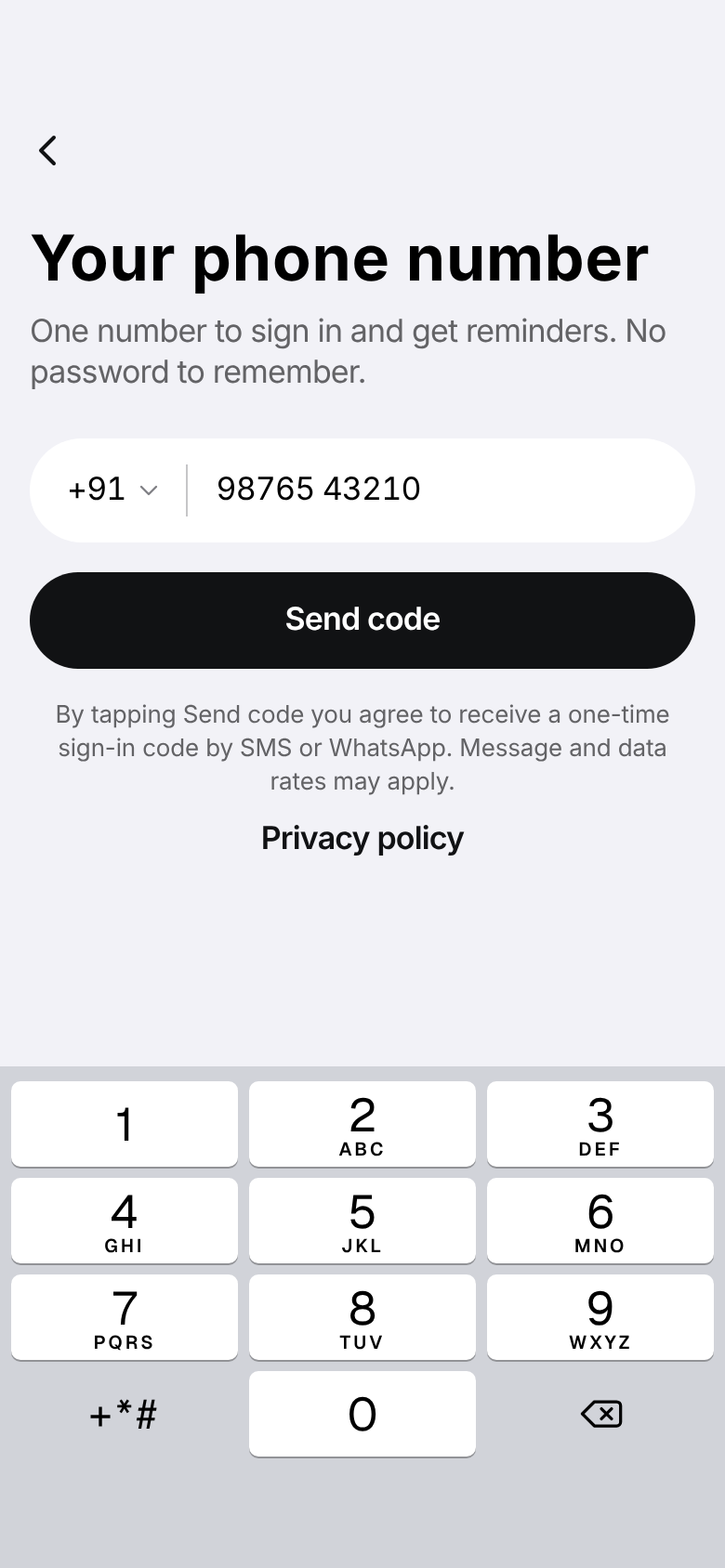
- Open AlongKeep. The sign-in screen is titled Your phone number.
- Choose your country code and enter your mobile number.
- Tap Send code.
One code goes to that number. In the United States and Canada it comes by SMS. Elsewhere it comes on WhatsApp, and on the next screen, under “Did not get it? Ask again by”, the SMS button sends it by SMS instead. Nothing is sent until you tap, and each tap sends one message. Under the Send code button, the screen says: “By tapping Send code you agree to receive a one-time sign-in code by SMS or WhatsApp. Message and data rates may apply.” It links to the privacy policy. There is no sign-up form and no list to join.
What a message says
A code arrives as one message:
123456 is your AlongKeep sign-in code. It expires in 10 minutes. Do not share it. Reply STOP to opt out.
If you change the number on your account, your old number gets one message saying so, so that you know if someone else did it:
The phone number on your AlongKeep account was changed. If this was not you, write to hello@alongkeep.com.
Nothing else is sent by SMS. Reminders and invitations come as notifications on your phone or on WhatsApp, and AlongKeep sends no marketing texts.
How often, and what it costs
One message for each code you ask for, and one if you change your number. The app stays signed in, so you ask for a code when you sign in on a phone, not every day. Message and data rates may apply. Your carrier charges them, and AlongKeep does not.
Stopping them
Reply STOP to a text from AlongKeep and that number stops texting you. You can still sign in with a code on WhatsApp. Reply START to allow texts again, and HELP for help.
Your number
We do not share, sell or provide your mobile phone number, or your consent to receive text messages, to third parties or affiliates for marketing or promotional purposes. Twilio delivers the messages for us and receives the number for that alone. The privacy policy says what else happens to your number, and the terms of use cover the rest.